Buy tomaszwieczorek.eu ?
We are moving the project
tomaszwieczorek.eu .
Are you interested in purchasing the domain
tomaszwieczorek.eu ?
domain@kv-gmbh.de · 0541-91531010
Buy tomaszwieczorek.eu ?
Which professions combine analytical or mathematical thinking with creativity?
Professions that combine analytical or mathematical thinking with creativity include data scientists, architects, and graphic designers. Data scientists use analytical skills to interpret complex data sets and develop creative solutions to business problems. Architects combine mathematical principles with creative design to create aesthetically pleasing and functional structures. Graphic designers use both analytical thinking to understand client needs and creative skills to design visually appealing solutions. **
What is analytical geometry?
Analytical geometry, also known as coordinate geometry, is a branch of mathematics that combines algebra and geometry. It involves studying geometric shapes using a coordinate system, where points are located using numerical coordinates. By using equations and formulas, analytical geometry allows us to describe and analyze geometric figures such as lines, circles, and parabolas in a precise and systematic way. This branch of mathematics is essential in various fields such as physics, engineering, and computer science for solving complex problems involving shapes and spatial relationships. **

Similar search terms for Analytical
Top-Angebote
Products related to Analytical:
-
KALATY Portfolio Java/Brown Wool Handmade Area RugBring epoch-straddling appeal to a casual living room with this Portfolio rug. Pairing classic, architecture-inspired motifs and a brown finish for understated appeal, this rug is Handmade from wool and viscose for resilience.64,37 $*Shipping: 0,00 $Secure redirect to the provider



-
What is analytical chemistry?
Analytical chemistry is the branch of chemistry that focuses on the identification and quantification of chemical substances. It involves the use of various techniques and methods to separate, identify, and quantify the components of a sample. Analytical chemists work to develop and validate methods for analyzing a wide range of substances, from pharmaceuticals and environmental pollutants to food and beverages. The information obtained from analytical chemistry is crucial for quality control, environmental monitoring, and research in various fields. **
-
What does analytical mean?
Analytical refers to the ability to examine and understand complex information by breaking it down into smaller components and evaluating their significance. It involves critically thinking about data, facts, and evidence to draw logical conclusions and make informed decisions. Analytical skills are important in various fields such as science, business, and problem-solving, as they enable individuals to solve problems, identify patterns, and make sound judgments based on evidence and reasoning. **
-
How could one design a presentation on analytical geometry in math?
To design a presentation on analytical geometry in math, one could start by outlining the key concepts and principles of analytical geometry, such as the Cartesian coordinate system, equations of lines and curves, and transformations. The presentation could include visual aids such as graphs, diagrams, and interactive examples to help illustrate these concepts. Additionally, real-world applications of analytical geometry, such as in engineering, physics, and computer graphics, could be included to demonstrate the practical relevance of the subject. Finally, the presentation could incorporate problem-solving exercises and interactive activities to engage the audience and reinforce their understanding of the material. **
-
What is the difference between analytical and synthetic cubism in art?
Analytical cubism, developed by Pablo Picasso and Georges Braque, focused on breaking down objects and figures into geometric shapes and analyzing their forms from multiple viewpoints. This style used a monochromatic color palette and often incorporated textural elements such as collage. On the other hand, synthetic cubism, also pioneered by Picasso and Braque, involved the use of more vibrant colors and the incorporation of found objects and materials into the artwork. This style aimed to synthesize different elements into a cohesive composition, often blurring the lines between painting and sculpture. Synthetic cubist works often featured more recognizable imagery and were more playful and experimental in their approach. **


Which professions require analytical thinking?
Professions that require analytical thinking include data analysts, financial analysts, scientists, engineers, and researchers. These professionals need to be able to analyze complex information, identify patterns, and draw conclusions to solve problems or make informed decisions. Strong analytical skills are essential in these fields to interpret data, develop strategies, and innovate solutions. **
What does analytical thinking mean?
Analytical thinking refers to the ability to systematically break down complex problems into smaller components, understand the underlying relationships between these components, and use logic and reasoning to evaluate and solve the problem. It involves critically examining information, identifying patterns, and drawing meaningful conclusions based on evidence and data. Analytical thinking helps individuals make informed decisions, solve problems effectively, and think more strategically. **
Top-Angebote
Products related to Analytical:
-
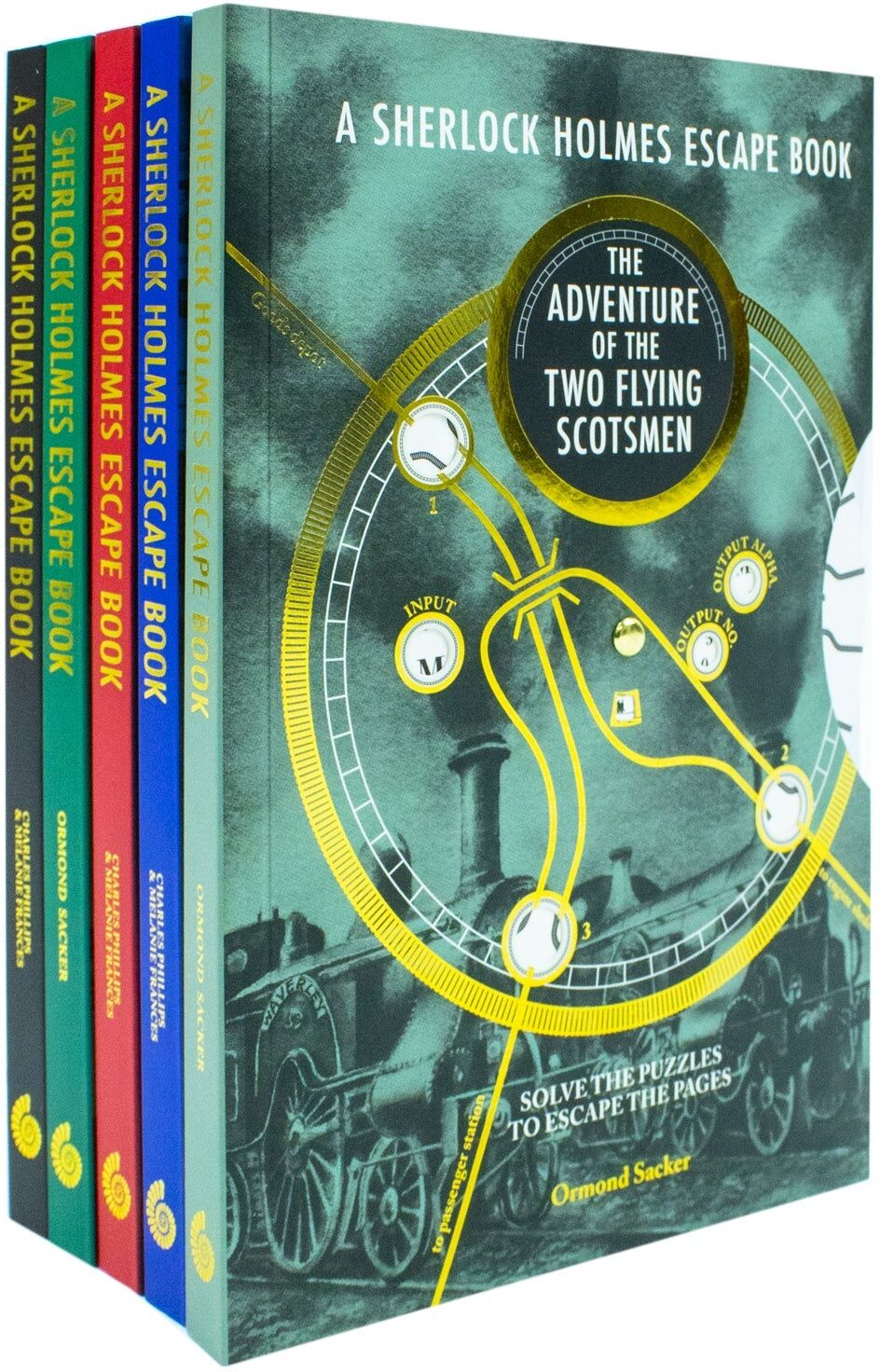
Ammonite Press Sherlock Holmes Escape Book 5 Books Collection Set (London Waterworks, British Museum, Analytical Engine, Tower of London, Two Flying Scotsmen)The Adventure of the London Waterworks You are Sherlock Holmes… at home at 221b Baker Street, when a mysterious letter is posted through your door. What is the meaning of the message cut from newsprint? Is there a clue hidden in the letters? Could there be more to discover in the fog-bound alleys of London town? This ingenious new series is a spin on the current urban craze for ‘Escape Rooms’, in which participants are locked in rooms, and must solve the puzzles they find there to make good their escape. The Adventure of the British Museum Taking on the role of Sherlock Holmes, in this new adventure readers find themselves trapped with Watson in the Enlightenment Gallery of the British Museum after a curator collapses in the Egyptian Collection. With King Edward VII due to arrive at the nearby tube station, and rumours of an anarchist plot, Holmes and Watson must find their way through the museum and fathom the involvement of both Mycroft and Colonel Sebastian Moran, if they are to win their freedom and save the day. The Adventure of the Analytical Engine In this new adventure, readers will take on the role of the world’s foremost consulting detective, Sherlock Holmes, snared at the centre of a cunning plot, after receiving a mysterious letter from beyond the grave. Intrigued by an invitation from mathematician Charles Babbage to view his newly completed pioneering contraption, Holmes becomes imprisoned in a magnificent London villa, where tricks, traps and illusions aim to divert him from uncovering the true purpose of the reimagined Analytical Engine. The Adventure of the Tower of London In the latest adventure in the series, readers will take on the role of the world’s foremost consulting detective, Sherlock Holmes. Holmes’s nemesis Moriarty has locked Sherlock’s friend, the musician Odon von Mihalovic, with the Crown Jewels in a cage in Tower Bridge the night before a special ceremony is due to be held for the Queen. Holmes and Watson are themselves trapped in the nearby Tower of London by Moriarty, and they must work through the night and against the clock to find and free Odon from the cage to prevent him being disgraced in the ceremony the following morning. The Adventure of the Two Flying Scotsmen In this latest tale, Sherlock Holmes and Watson find themselves trapped on a Flying Scotsman bound for Edinburgh after being mistakenly led to believe that Sherlock is needed in Scotland to thwart a plot against the Queen. Readers will quickly discover that the plot in motion is rigging a rail race between the two Flying Scotsmen that day. A race where the Queen’s son Bertie has ill-advisedly lent money to a small gang of ne’er-do-wells within the household of the socialite Daisy Greville. A woman with whom Bertie is having a secret affair. These books combine: Riddles Logic Puzzles Timed Challenges Mathematical Brainteasers Maps and Mazes.18,89 £*Shipping: 2,99 £Secure redirect to the provider
-
Smells Like Spells Norse Magic Bragi incense sticks (inspiration/creativity) 50 gSmells Like Spells Norse Magic Bragi, 50 g, Incense Sticks Home Scents, Smells Like Spells Norse Magic Bragi incense sticks are suitable for scenting spaces and creating a pleasant atmosphere. They help prevent stress, have a positive effect on the human psyche, calm the mind and are also a disinfectant. Characteristics: a fresh fragrance a herbal aroma How to use: Light the end of the incense stick and blow out the flame. Place the stick in a holder. Make sure there is no draught in the room. Place the holder on a hard surface so that it does not fall over. Do not leave the product within the reach of children or pets.6,10 £*Shipping: 3,99 £Secure redirect to the provider
-
KALATY Portfolio Java/Brown Wool Handmade Area RugBring epoch-straddling appeal to a casual living room with this Portfolio rug. Pairing classic, architecture-inspired motifs and a brown finish for understated appeal, this rug is Handmade from wool and viscose for resilience.64,37 $*Shipping: 0,00 $Secure redirect to the provider
-
Which professions combine analytical or mathematical thinking with creativity?
Professions that combine analytical or mathematical thinking with creativity include data scientists, architects, and graphic designers. Data scientists use analytical skills to interpret complex data sets and develop creative solutions to business problems. Architects combine mathematical principles with creative design to create aesthetically pleasing and functional structures. Graphic designers use both analytical thinking to understand client needs and creative skills to design visually appealing solutions. **
-
What is analytical geometry?
Analytical geometry, also known as coordinate geometry, is a branch of mathematics that combines algebra and geometry. It involves studying geometric shapes using a coordinate system, where points are located using numerical coordinates. By using equations and formulas, analytical geometry allows us to describe and analyze geometric figures such as lines, circles, and parabolas in a precise and systematic way. This branch of mathematics is essential in various fields such as physics, engineering, and computer science for solving complex problems involving shapes and spatial relationships. **
-
What is analytical chemistry?
Analytical chemistry is the branch of chemistry that focuses on the identification and quantification of chemical substances. It involves the use of various techniques and methods to separate, identify, and quantify the components of a sample. Analytical chemists work to develop and validate methods for analyzing a wide range of substances, from pharmaceuticals and environmental pollutants to food and beverages. The information obtained from analytical chemistry is crucial for quality control, environmental monitoring, and research in various fields. **
-
What does analytical mean?
Analytical refers to the ability to examine and understand complex information by breaking it down into smaller components and evaluating their significance. It involves critically thinking about data, facts, and evidence to draw logical conclusions and make informed decisions. Analytical skills are important in various fields such as science, business, and problem-solving, as they enable individuals to solve problems, identify patterns, and make sound judgments based on evidence and reasoning. **
Similar search terms for Analytical
-
How could one design a presentation on analytical geometry in math?
To design a presentation on analytical geometry in math, one could start by outlining the key concepts and principles of analytical geometry, such as the Cartesian coordinate system, equations of lines and curves, and transformations. The presentation could include visual aids such as graphs, diagrams, and interactive examples to help illustrate these concepts. Additionally, real-world applications of analytical geometry, such as in engineering, physics, and computer graphics, could be included to demonstrate the practical relevance of the subject. Finally, the presentation could incorporate problem-solving exercises and interactive activities to engage the audience and reinforce their understanding of the material. **
-
What is the difference between analytical and synthetic cubism in art?
Analytical cubism, developed by Pablo Picasso and Georges Braque, focused on breaking down objects and figures into geometric shapes and analyzing their forms from multiple viewpoints. This style used a monochromatic color palette and often incorporated textural elements such as collage. On the other hand, synthetic cubism, also pioneered by Picasso and Braque, involved the use of more vibrant colors and the incorporation of found objects and materials into the artwork. This style aimed to synthesize different elements into a cohesive composition, often blurring the lines between painting and sculpture. Synthetic cubist works often featured more recognizable imagery and were more playful and experimental in their approach. **
-
Which professions require analytical thinking?
Professions that require analytical thinking include data analysts, financial analysts, scientists, engineers, and researchers. These professionals need to be able to analyze complex information, identify patterns, and draw conclusions to solve problems or make informed decisions. Strong analytical skills are essential in these fields to interpret data, develop strategies, and innovate solutions. **
-
What does analytical thinking mean?
Analytical thinking refers to the ability to systematically break down complex problems into smaller components, understand the underlying relationships between these components, and use logic and reasoning to evaluate and solve the problem. It involves critically examining information, identifying patterns, and drawing meaningful conclusions based on evidence and data. Analytical thinking helps individuals make informed decisions, solve problems effectively, and think more strategically. **
* All prices are inclusive of VAT and, if applicable, plus shipping costs. The offer information is based on the details provided by the respective shop and is updated through automated processes. Real-time updates do not occur, so deviations can occur in individual cases. ** Note: Parts of this content were created by AI.