Buy tomaszwieczorek.eu ?
We are moving the project
tomaszwieczorek.eu .
Are you interested in purchasing the domain
tomaszwieczorek.eu ?
domain@kv-gmbh.de · 0541-91531010
Buy tomaszwieczorek.eu ?
What is the implication?
The implication refers to the conclusion or suggestion that can be drawn from a particular situation or piece of information. It is the logical consequence or significance of something that has been said or done. Understanding the implication is important as it helps us grasp the deeper meaning or potential outcomes of a given scenario. It allows us to make informed decisions and anticipate the possible effects of our actions. **
Are implication and conjunction the same?
No, implication and conjunction are not the same. Implication, represented by the symbol "→", is a logical operation that represents "if-then" statements. It states that if the antecedent is true, then the consequent must also be true. On the other hand, conjunction, represented by the symbol "∧", is a logical operation that represents "and" statements. It states that both the statements connected by the conjunction must be true for the entire statement to be true. In summary, implication deals with conditional relationships, while conjunction deals with the combination of multiple true statements. **


Similar search terms for Implication
Top-Angebote
Products related to Implication:
-
KALATY Portfolio Java/Brown Wool Handmade Area RugBring epoch-straddling appeal to a casual living room with this Portfolio rug. Pairing classic, architecture-inspired motifs and a brown finish for understated appeal, this rug is Handmade from wool and viscose for resilience.64,37 $*Shipping: 0,00 $Secure redirect to the provider
-
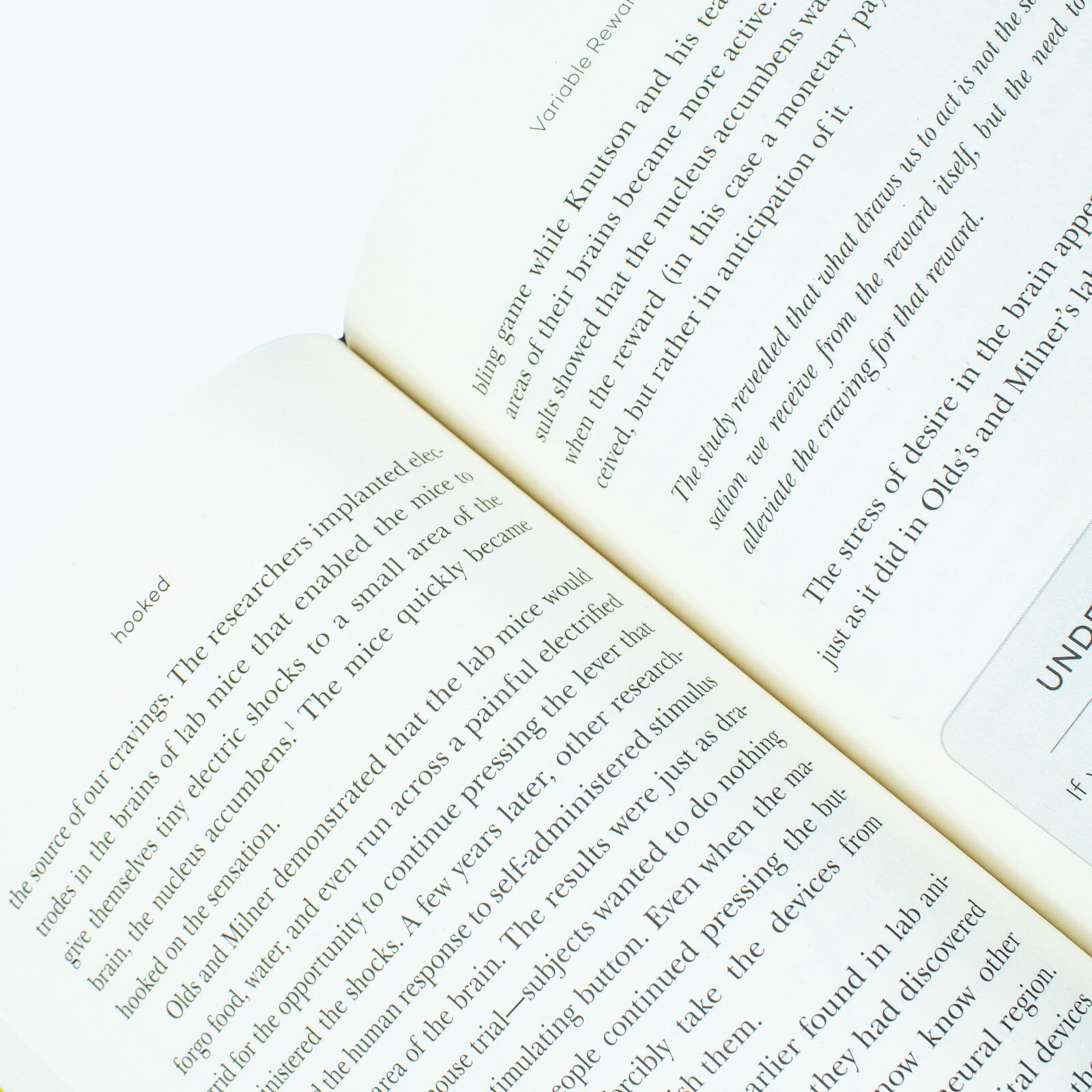
Portfolio Penguin Hooked: How to Build Habit-Forming Products by Nir EyalNir Eyal reveals how successful companies create products people can't put down - and how you can tooWhy do some products capture our attention while others flop? What makes us engage with certain things out of sheer habit? Is there an underlying pattern to how technologies hook us?Nir Eyal answers these questions (and many more) with the Hook Model - a four-step process that, when embedded into products, subtly encourages customer behaviour. Through consecutive "hook cycles," these products bring people back again and again without depending on costly advertising or aggressive messaging.Hooked is based on Eyal's years of research, consulting, and practical experience. He wrote the book he wished had been available to him as a start-up founder - not abstract theory, but a how-to guide for building better products. Hooked is written for product managers, designers, marketers, start-up founders, and anyone who seeks to understand how products influence our behaviour.Eyal provides readers with practical insights to create user habits that stick; actionable steps for building products people love; and riveting examples from the iPhone to Twitter, Pinterest and the Bible App.7,98 £*Shipping: 2,99 £Secure redirect to the provider



-
How do I prove the following implication?
To prove an implication, you typically assume the antecedent (the statement that comes before the "if" in the implication) is true and then show that the consequent (the statement that comes after the "then" in the implication) must also be true. This can be done through direct proof, contrapositive proof, proof by contradiction, or proof by cases, depending on the specific implication and the context in which it is being proven. It is important to carefully follow the logical steps and rules of inference to ensure a valid proof. **
-
How can I best remember the implication?
To best remember the implication, you can try creating associations or connections between the information you want to remember and something familiar to you. This could be through visualization, creating mnemonic devices, or using repetition to reinforce the concept in your memory. Additionally, practicing active recall by testing yourself on the implication and explaining it in your own words can help solidify your understanding and retention of the information. Lastly, teaching the concept to someone else can also be an effective way to remember the implication as it requires you to articulate and reinforce your understanding of the topic. **
-
Does an implication apply to both sides?
Yes, an implication applies to both sides. In an implication statement "if A then B," A is the antecedent and B is the consequent. This means that if A is true, then B must also be true. However, if A is false, then the statement is still considered true, as there is no requirement for B to be true in that case. Therefore, an implication applies to both sides, but the truth value of the antecedent does not necessarily determine the truth value of the consequent. **
-
What is the difference between allusion and implication?
An allusion is a reference to a person, place, event, or literary work that the author expects the reader to recognize and understand. It is a direct or indirect reference to something outside of the text. On the other hand, an implication is a suggestion or hint that is not explicitly stated in the text but can be inferred by the reader. It is the conclusion or meaning that the reader draws from the text based on the information provided. In summary, an allusion is a direct reference, while an implication is a subtle suggestion or inference. **


Can a permit also be granted by implication?
Yes, a permit can also be granted by implication. This means that even if a permit is not explicitly stated or written down, it can still be inferred or implied based on the actions or conduct of the parties involved. For example, if a property owner consistently allows a certain activity to take place on their property without objection, it can be implied that they have granted a permit for that activity. Implied permits are often based on the principle of estoppel, where a party is prevented from denying something due to their previous actions or representations. **
What do I not understand about disjunction and implication?
It seems like you may not fully understand the difference between disjunction and implication in logic. Disjunction, represented by the symbol "∨", is a logical operation that represents "or" - it is true if at least one of the statements is true. Implication, represented by the symbol "→", is a logical operation that represents "if...then" - it is false only when the antecedent is true and the consequent is false. Understanding the nuances of how these logical operations work and how they are used in different contexts can help clarify any confusion you may have. **
Top-Angebote
Products related to Implication:
-
Smells Like Spells Norse Magic Bragi incense sticks (inspiration/creativity) 50 gSmells Like Spells Norse Magic Bragi, 50 g, Incense Sticks Home Scents, Smells Like Spells Norse Magic Bragi incense sticks are suitable for scenting spaces and creating a pleasant atmosphere. They help prevent stress, have a positive effect on the human psyche, calm the mind and are also a disinfectant. Characteristics: a fresh fragrance a herbal aroma How to use: Light the end of the incense stick and blow out the flame. Place the stick in a holder. Make sure there is no draught in the room. Place the holder on a hard surface so that it does not fall over. Do not leave the product within the reach of children or pets.6,10 £*Shipping: 3,99 £Secure redirect to the provider
-
KALATY Portfolio Java/Brown Wool Handmade Area RugBring epoch-straddling appeal to a casual living room with this Portfolio rug. Pairing classic, architecture-inspired motifs and a brown finish for understated appeal, this rug is Handmade from wool and viscose for resilience.64,37 $*Shipping: 0,00 $Secure redirect to the provider
-
What is the implication?
The implication refers to the conclusion or suggestion that can be drawn from a particular situation or piece of information. It is the logical consequence or significance of something that has been said or done. Understanding the implication is important as it helps us grasp the deeper meaning or potential outcomes of a given scenario. It allows us to make informed decisions and anticipate the possible effects of our actions. **
-
Are implication and conjunction the same?
No, implication and conjunction are not the same. Implication, represented by the symbol "→", is a logical operation that represents "if-then" statements. It states that if the antecedent is true, then the consequent must also be true. On the other hand, conjunction, represented by the symbol "∧", is a logical operation that represents "and" statements. It states that both the statements connected by the conjunction must be true for the entire statement to be true. In summary, implication deals with conditional relationships, while conjunction deals with the combination of multiple true statements. **
-
How do I prove the following implication?
To prove an implication, you typically assume the antecedent (the statement that comes before the "if" in the implication) is true and then show that the consequent (the statement that comes after the "then" in the implication) must also be true. This can be done through direct proof, contrapositive proof, proof by contradiction, or proof by cases, depending on the specific implication and the context in which it is being proven. It is important to carefully follow the logical steps and rules of inference to ensure a valid proof. **
-
How can I best remember the implication?
To best remember the implication, you can try creating associations or connections between the information you want to remember and something familiar to you. This could be through visualization, creating mnemonic devices, or using repetition to reinforce the concept in your memory. Additionally, practicing active recall by testing yourself on the implication and explaining it in your own words can help solidify your understanding and retention of the information. Lastly, teaching the concept to someone else can also be an effective way to remember the implication as it requires you to articulate and reinforce your understanding of the topic. **
Similar search terms for Implication
-
Portfolio Penguin Hooked: How to Build Habit-Forming Products by Nir EyalNir Eyal reveals how successful companies create products people can't put down - and how you can tooWhy do some products capture our attention while others flop? What makes us engage with certain things out of sheer habit? Is there an underlying pattern to how technologies hook us?Nir Eyal answers these questions (and many more) with the Hook Model - a four-step process that, when embedded into products, subtly encourages customer behaviour. Through consecutive "hook cycles," these products bring people back again and again without depending on costly advertising or aggressive messaging.Hooked is based on Eyal's years of research, consulting, and practical experience. He wrote the book he wished had been available to him as a start-up founder - not abstract theory, but a how-to guide for building better products. Hooked is written for product managers, designers, marketers, start-up founders, and anyone who seeks to understand how products influence our behaviour.Eyal provides readers with practical insights to create user habits that stick; actionable steps for building products people love; and riveting examples from the iPhone to Twitter, Pinterest and the Bible App.7,98 £*Shipping: 2,99 £Secure redirect to the provider
-
Does an implication apply to both sides?
Yes, an implication applies to both sides. In an implication statement "if A then B," A is the antecedent and B is the consequent. This means that if A is true, then B must also be true. However, if A is false, then the statement is still considered true, as there is no requirement for B to be true in that case. Therefore, an implication applies to both sides, but the truth value of the antecedent does not necessarily determine the truth value of the consequent. **
-
What is the difference between allusion and implication?
An allusion is a reference to a person, place, event, or literary work that the author expects the reader to recognize and understand. It is a direct or indirect reference to something outside of the text. On the other hand, an implication is a suggestion or hint that is not explicitly stated in the text but can be inferred by the reader. It is the conclusion or meaning that the reader draws from the text based on the information provided. In summary, an allusion is a direct reference, while an implication is a subtle suggestion or inference. **
-
Can a permit also be granted by implication?
Yes, a permit can also be granted by implication. This means that even if a permit is not explicitly stated or written down, it can still be inferred or implied based on the actions or conduct of the parties involved. For example, if a property owner consistently allows a certain activity to take place on their property without objection, it can be implied that they have granted a permit for that activity. Implied permits are often based on the principle of estoppel, where a party is prevented from denying something due to their previous actions or representations. **
-
What do I not understand about disjunction and implication?
It seems like you may not fully understand the difference between disjunction and implication in logic. Disjunction, represented by the symbol "∨", is a logical operation that represents "or" - it is true if at least one of the statements is true. Implication, represented by the symbol "→", is a logical operation that represents "if...then" - it is false only when the antecedent is true and the consequent is false. Understanding the nuances of how these logical operations work and how they are used in different contexts can help clarify any confusion you may have. **
* All prices are inclusive of VAT and, if applicable, plus shipping costs. The offer information is based on the details provided by the respective shop and is updated through automated processes. Real-time updates do not occur, so deviations can occur in individual cases. ** Note: Parts of this content were created by AI.